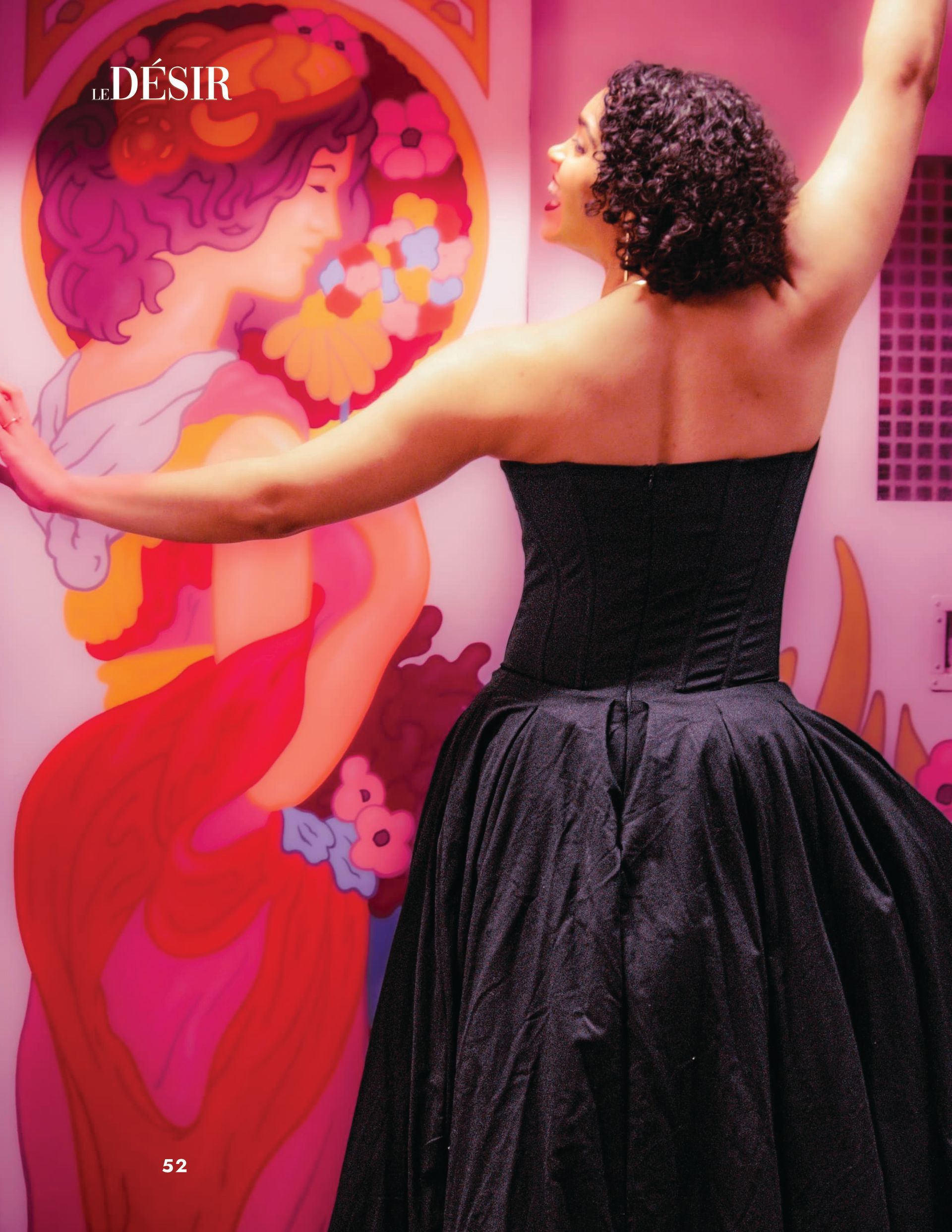
The Presence of Confidence

There is a quiet authority that walks into a room before a confident model even speaks.
Confidence is not noise. It is signal. And in an industry that often feeds on insecurity, true confidence becomes both armor and a compass.

@Respectfullyshelby embodies a trait many attempt to imitate but few truly hold. Grounded confidence.
The kind that does not need validation because it is built internally.
Her publication in Magnifique Magazine’s February edition is not just a milestone.
It is a visible echo of something deeper.
Her own Self-trust.
This matters because confidence is not only about booking work, It also shapes how others behave around you, for better or worse.
Let’s step into the psychology:

What Science Says About Confidence:
Confidence is strongly tied to self-efficacy, a concept developed by psychologist Albert Bandura.
Self-efficacy refers to a person’s belief in their ability to succeed in specific situations.
Research consistently shows that individuals with high self-efficacy:
- Persist longer under pressure
- Recover faster from rejection
- Are less vulnerable to manipulation
- Make clearer decisions under stress
In modeling, where rejection is frequent and comparison is constant, self-efficacy becomes a protective factor against emotional erosion.
Neuroscience also shows that confident posture and behavior influence cortisol and testosterone balance. Higher confidence reduces stress hormone output and improves emotional regulation. This means confidence is not just emotional, it is biological.
Confidence literally stabilizes your nervous system.

How Confidence Affects Others
Strong confidence acts like a mirror.
It reveals people to themselves.
Some feel inspired, Others feel threatened.
When someone lacks confidence internally, your confidence can unconsciously trigger their insecurity. This often produces predictable behaviors..
Common Behaviors from Insecure Individuals:
- Subtle Undermining
They may disguise criticism as advice. Small comments meant to plant doubt.
- Comparison Fixation
They constantly measure themselves against you instead of focusing on their own growth.
- Passive Competition
They appear supportive but quietly root for your mistakes.
- Energy Draining Conversations
Interactions leave you feeling heavy, confused, or diminished rather than supported.
- Validation Seeking
They need reassurance, praise, or approval to feel stable around you.
None of this is random.
Research in social psychology shows that individuals with fragile self-esteem often protect themselves through deflection, projection, and comparison rather than growth.

Red Flags of Low Confidence in Others
When building your name in the industry, protecting your energy becomes essential.
Always watch patterns, not words.
- They celebrate you publicly but question you privately
- They minimize your achievements or attribute them to luck
- They subtly discourage bold moves or big opportunities
- They mirror you excessively instead of being authentic
- They create tension disguised as concern
- You feel the need to shrink, explain, or soften yourself around them
Your nervous system is a powerful detector.
Chronic unease around someone is data, not imagination.

The Psychological Cost of the Industry
The modeling industry has historically used comparison, scarcity, and critique to maintain control.
Studies on appearance-based professions show increased risk of:
- Identity erosion
- External validation dependence
- Anxiety tied to perception
- Emotional fatigue from rejection cycles
The antidote is internal anchoring.
Confidence built from within, not from applause.

Proven Ways to Stay Strong
Here are some evidence-based psychological strategies.
1. Identity Anchoring
Define who you are beyond modeling. Research shows people with multi-layered identity structures are more resilient to rejection and criticism
You are not just a face. You are a mind, voice, presence, and force.
2. Cognitive Reframing
Studies in cognitive behavioral psychology show that reframing rejection as feedback rather than failure preserves confidence and motivation.
Rejection is redirection, not definition.
3. Nervous System Regulation
Breathing techniques, grounding, and posture stabilization reduce cortisol and improve emotional strength. A regulated nervous system protects confidence under pressure.
Calm is power.
4. Controlled Environment Exposure
Limit prolonged exposure to individuals who drain or destabilize you. Emotional contagion is real. Confidence grows in supportive environments and erodes in hostile ones.
Guard your space.
5. Self-Trust Conditioning
Repeatedly keeping promises to yourself strengthens neural pathways associated with confidence and self-belief. Discipline builds internal certainty.
Do what you say you will do.
6. Internal Validation Practice
Psychological resilience research shows that individuals who validate themselves internally are less vulnerable to manipulation, comparison, and external pressure.
Outer applause is optional but having Self-trust in the modeling industry is essential.

The Real Power of Confidence
True confidence is not volume but stability.
It is the ability to remain centered when approval is absent, when criticism appears, and when pressure tries to bend you out of shape.
It is built through self-trust, not attention.
In psychology, confidence rooted in self-efficacy creates behavioral consistency.
You make clearer decisions, tolerate rejection without losing identity, and resist manipulation because your direction is internally guided rather than externally controlled.
This is why grounded confidence changes how others respond to you. Some people feel inspired by it, Others feel unsettled by it.
Both reactions reveal truth that should never be ignored.

As your name grows, visibility increases.
So does projection from others.
Support, envy, admiration, insecurity, alignment, resistance.
You will see all of it.
Confidence allows you to interpret these reactions without absorbing them.
The right people will recognize your stability and move closer.
Those operating from insecurity often expose themselves through comparison, subtle doubt, or quiet resistance.
In an industry built on evaluation and perception, confidence becomes protection.
It protects identity from erosion, protects your mind from comparison, and protects your decisions from outside pressure.
Research in performance psychology consistently shows that individuals with strong internal validation maintain higher resilience, recover faster from setbacks, and sustain long term growth without emotional burnout.

Confidence is clarity.
You know who you are, what you bring, and where you are going, regardless of any noise around you.
When confidence is built from repeated self-trust, emotional regulation, and internal validation, it stops being fragile. It no longer depends on praise, opportunity, or approval. It becomes stable, durable, and difficult for outside forces to destabilize.
That is the real power.

Step Into Your Power
Confidence does not grow in isolation. It strengthens in environments where it is understood, protected, and guided with intention. Building real confidence requires working beside someone who can recognize your potential, hold steady space when doubt appears, and help you move forward with clarity rather than confusion.
My twenty four years in front of the camera have shaped how I guide models today. Experience is not just time spent in the industry. It is pattern recognition, emotional awareness, and the ability to see strength in someone even when they cannot yet see it in themselves.
When confidence feels distant, I know how to help you build it. When your voice feels small, I know how to help you expand it.
If you are ready to stop shrinking, ready to take up space without apology, and ready to take control of your own path, I am currently accepting new models who are serious about stepping into their power and shaping their future with intention.
We create our own destiny through action, not permission.
If this speaks to you, take the first step.
Fill out the model form and begin.
Legacy Letters